Showing 27 Result(s)
Baptism

Is Baptism Necessary for Salvation?
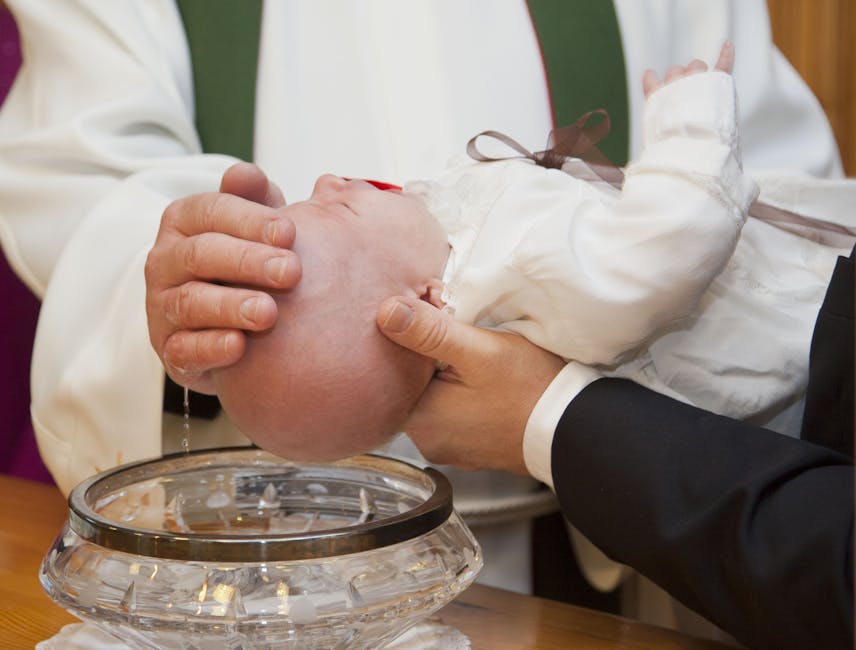
The belief that baptism is necessary for salvation is also known as “baptismal regeneration.” It is our contention that baptism is an important step of obedience for a Christian, but we adamantly reject baptism as being required for salvation. We strongly believe that each and every Christian should be water baptized by immersion. Baptism illustrates a believer’s identification with Christ’s death, burial, and resurrection. Romans 6:3-4 declares, “Or don’t you know that all of us who were baptized into Christ Jesus were baptized into His death? We were therefore buried with him through baptism into death in order that, just as Christ was raised from the dead through the glory of the Father, we too may live a new life.” The action of being immersed in the water illustrates dying and being buried with Christ. The action of coming out of the water pictures Christ’s resurrection.

Requiring anything in addition to faith in Jesus Christ for salvation is a works-based salvation. To add anything to the gospel is to say that Jesus’ death on the cross was not sufficient to purchase our salvation. To say that baptism is necessary for salvation is to say we must add our own good works and obedience to Christ’s death in order to make it sufficient for salvation. Jesus’ death alone paid for our sins. Jesus’ payment for our sins is appropriated to our “account” by faith alone (see Ephesians 2:8-9). Therefore, baptism is an important step of obedience after salvation but cannot be a requirement for salvation. Yes, there are some verses that seem to indicate baptism as a requirement for salvation. However, since the Bible so clearly tells us that salvation is received by faith alone (John 3:16; Ephesians 2:8-9; Titus 3:5), there must be a different interpretation of those verses. Scripture does not contradict Scripture. In Bible times, a person who converted from one religion to another was often baptized to identify conversion.

Baptism was the means of making a decision public. Those who refused to be baptized were saying they did not truly believe. So, in the minds of the apostles and early disciples, the idea of an un-baptized believer was unheard of. When a person claimed to believe in Christ, yet was ashamed to proclaim his faith in public, it indicated that he did not have true faith. If baptism is necessary for salvation, why would Paul have said, “I am thankful that I did not baptize any of you except Crispus and Gaius” (1 Corinthians 1:14)? Why would he have said, “For Christ did not send me to baptize, but to preach the gospel—not with words of human wisdom, lest the cross of Christ be emptied of its power” (1 Corinthians 1:17)? Granted, in this passage Paul is arguing against the divisions that plagued the Corinthian church.

However, how could Paul possibly say, “I am thankful that I did not baptize…” or “For Christ did not send me to baptize…” if baptism were necessary for salvation? If baptism is necessary for salvation, Paul would literally be saying, “I am thankful that you were not saved…” and “For Christ did not send me to save…” That would be an unbelievably ridiculous statement for Paul to make. Further, when Paul gives a detailed outline of what he considers the gospel (1 Corinthians 15:1-8), why does he neglect to mention baptism? If baptism is a requirement for salvation, how could any presentation of the gospel lack a mention of baptism? Baptism is not necessary for salvation. Baptism does not save from sin but from a bad conscience. In 1 Peter 3:21, Peter clearly taught that baptism was not a ceremonial act of physical purification, but the pledge of a good conscience toward God. Baptism is the symbol of what has already occurred in the heart and life of one who has trusted Christ as Savior (Romans 6:3-5). Baptism is an important step of obedience that every Christian should take. Baptism cannot be a requirement for salvation. To make it such is an attack on the sufficiency of the death and resurrection of Jesus Christ.
Holy Trinity

The Simplest Way to Understand the Trinity

The best way to understand the Trinity that I always recommend is to connect the Trinity to the Gospel as directly as possible. And one of the things this means is when you begin, as a Christian, thinking about the Trinity, you actually already have all the equipment you need in your mind, and in your heart, and your experience. You’ve got all the pieces of the puzzle there. You just need to be able to see them all together to understand that what you’re thinking about is the Trinity. Here’s the reason this is important. If you think that the Trinity is something that you have not had any experience with or understanding of, you’re going to kind of go off on a hunting trip to find interesting, neat, little analogies that might kind of apply. So you’ll do, you know, an apple has a core, and the flesh of the apple, and the skin of the apple, and that’s kind of like the Trinity.

And then you’ll stop and say, “But, of course, God’s not an apple, and it’s not very much like the Trinity.” So the Trinity is kind of like water being liquid water, and ice, and steam, and then you’ll stop and say, “But, of course, that’s not what God’s like.” And people do this a lot, and it doesn’t really amount to much because they don’t really believe God is very much like any of these things.

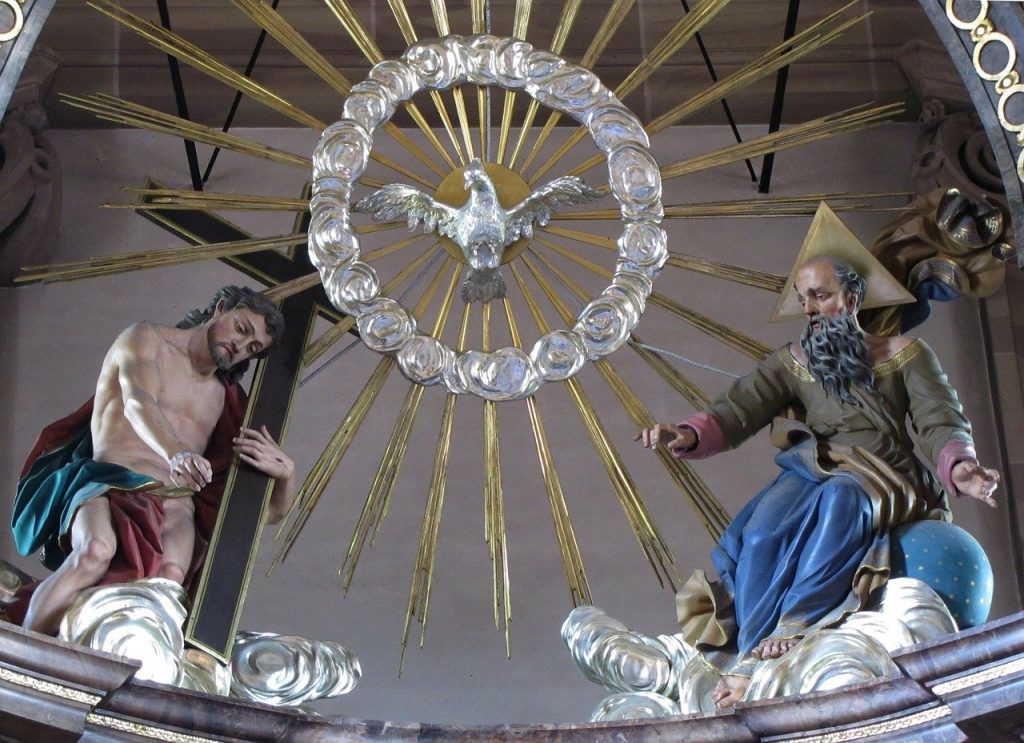
They’re just looking for some little hook to think, “How could something that is three also be something that is one?” And it’s a pretty fruitless exercise. When I say connect the Trinity to the Gospel as directly as possible, here’s what I mean. The eternal God, who always was Father, Son, and Holy Spirit, made himself known in the central biblical act of the Father sending the Son and sending the Holy Spirit. This is the only part that’s really hard. If you ask what God is like, that is, what is the eternal triune of God like, well, what would he have been like if he had never made himself known to us? What would the being of God be? The eternal God is like the Father sending the Son and the Holy Spirit.

That is to say, when the Father sent the Son and the Father sent the Spirit, they had not been sent before. But God the Father sent them in order to show that within the very life of God, God is the Father with the Son and the Spirit eternally being from him. That’s the nature of the divine life. So the tricky part about this is, if I say that the Trinity is like the Father sending the Son and the Spirit, it doesn’t sound like I’ve explained the Trinity, but that’s because our assumption is the Trinity must be some strange, new, mysterious answer I’ve never heard before. What I really hope people get is the shock of recognizing, if I know that the Father sent the Son and the Holy Spirit, and that the Father, and the Son, and the Spirit are God, then I actually know the central most important thing about the Trinity.

Beliefs

Our Beliefs

  • The Holy Scriptures are the inspired, infallible, Word of God, and the revealed will of God.
  • The trinity of the Godhead; the Father, Son and Holy Ghost, are all co-equal, and in Jesus Christ all the fullness of the Godhead dwells.
  • The enemy of our soul is Satan and the reality that he does exist.
  • Man was created in the image of God, but through Adam’s transgression and fall, sin entered the world. All have sinned and come short of the glory of God.
  • The only atonement for man’s sin is by the shed blood of Jesus Christ.
  • Salvation comes by repentance and believing with your heart and confessing with your mouth, Jesus is Lord. Salvation is by faith in Jesus Christ, not by human works. It is by grace we are saved.
  • Jesus Christ is the only begotten Son of God, born of the virgin Mary, and was God manifest in the flesh.
  • The new birth is a new creation from above, the direct operation of the Word of God and the Spirit of God upon the believer’s life, changing their spirit completely.
  • Baptism in water is an act of obedience and a statement to the world that the believer has died with Christ and has been raised with Him in the newness of life.
  • The baptism of the Holy Ghost with the evidence of speaking in tongues is a free gift for all believers. The Holy Ghost empowers the believer and bestows the gifts of the Spirit and in understanding, and the gift of prophecy.
  • Living in divine health; healing and salvation go together. They were both paid for at Calvary by the shed blood of Jesus Christ.
  • Prayer for the sick, by anointing them with oil and the prayer of faith shall save the sick and the Lord shall raise them up.
  • The church (the body of Christ) is not separated by denomination, but is composed of all blood-washed believers.
  • Marriage is defined as God’s established union between a man and a woman.